
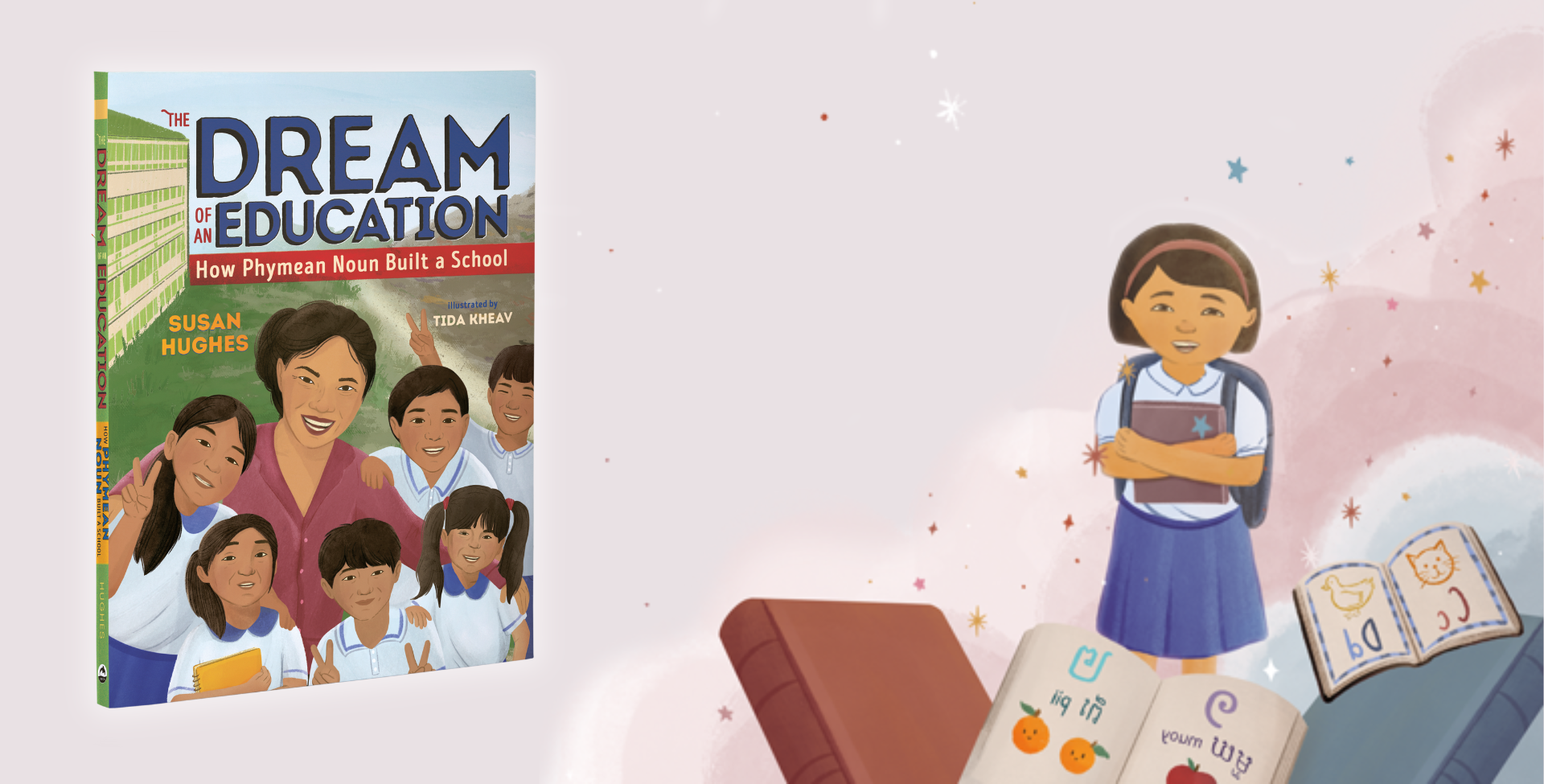
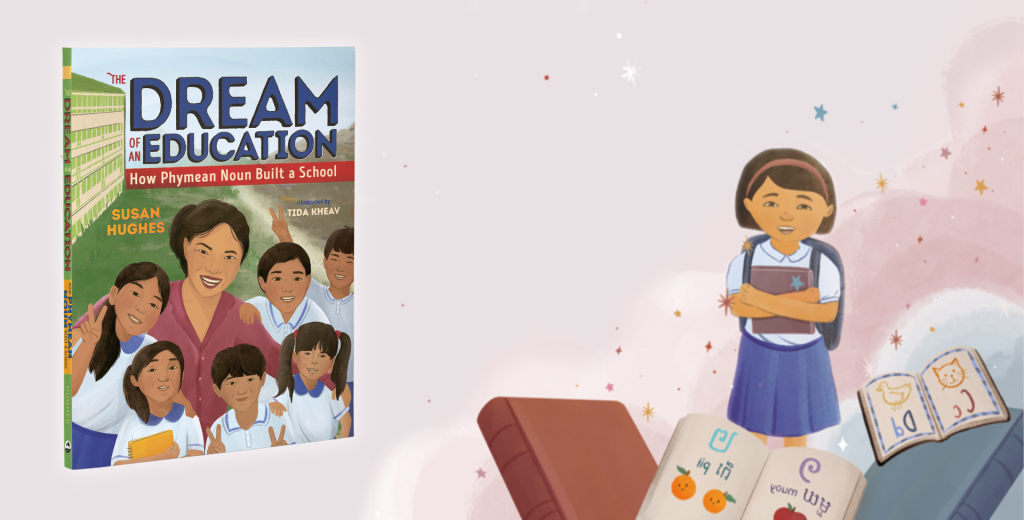
Through Noun’s inspirational life story, Hughes and Kheav present a part of history that many readers are unlikely to know. An intriguing and informative biography about seldom-covered Cambodian history formatted for middle grade readers.
—School Library Journal
The Dream of an Education introduces readers to Phymean Noun and her mission to give Cambodian children living in poverty access to education. Read on to hear from author Susan Hughes about how she came to know Phymean’s incredible story and how she brought it to life on the page.
When did you first hear Phymean’s story?
Many years ago—perhaps 17 or more—I was putting together an outline for a nonfiction book about unusual and amazing schools around the world. I was researching quite extensively when I came across an article about Phymean Noun, a Cambodian woman who had started a school on a dump site in Phnom Penh.
Why had she done this?
Many children worked on the dump, picking garbage for resale, helping to support their families, and these children didn’t have the time or money to go to school. So Phymean had built a “free” school right there, right beside the dump, to allow the children the opportunity to get to class quickly and easily. And, recognizing the value of their labor to the survival of their families, she offered bags of rice to their families, and meals at school for the children, in exchange for the children’s time in the classroom.
A few years later, Phymean was in Toronto at an educational conference. I had already been corresponding with her, but it was wonderful to meet her in person for the first time!
What was it about Phymean’s story that inspired you to write a book about her?
So many things! Essentially, I read about Phymean’s childhood dream of getting an education and her struggles to achieve this goal—and then her decision, years later, after she’d finally achieved a place of security and safety for herself, to risk it all to build a school so others could achieve their dreams of an education—and I knew I had to introduce her and her story to young readers!
What was your process for writing The Dream of an Education? How did interviewing and research play a role in the writing process?
It was actually very challenging to research and write this book! Of course I couldn’t even think of writing the book without Phymean’s help and support. So my first step, before even pitching the idea to the Orca editors, was to contact Phymean to ask if she’d agree to be available for interviews and questions, to provide information for visuals and so on. She readily agreed. And so in addition to reading the many articles and blogs written about her, and watching online interviews of her, she and I had many video chats and email communications over a period of many months.
Phymean also agreed to help me connect with some of the central people in her life so I could interview them about her story. And she connected me with three former students—Kean, Chantrea and Veasna—who had come to her school as children at various times. I really enjoyed interviewing each of them about their early experiences at PIO and including their stories in the book.
In addition, I had to do some detective work to locate and contact other folks who could add to the story in other ways, corroborating details, filling in missing pieces, sharing their insights and experiences and so on.
And I did research using online and library sources to learn about the geography, history and complex political story of Cambodia and the region. When I needed an expert to review my narrative, the Center for Cambodian Studies in Siem Reap helped connect me with Dr. Theara Thun, a Cambodian and Southeast Asian specialist, who agreed to read and review the manuscript.
What was it like touring one of Phymean’s schools in Cambodia?
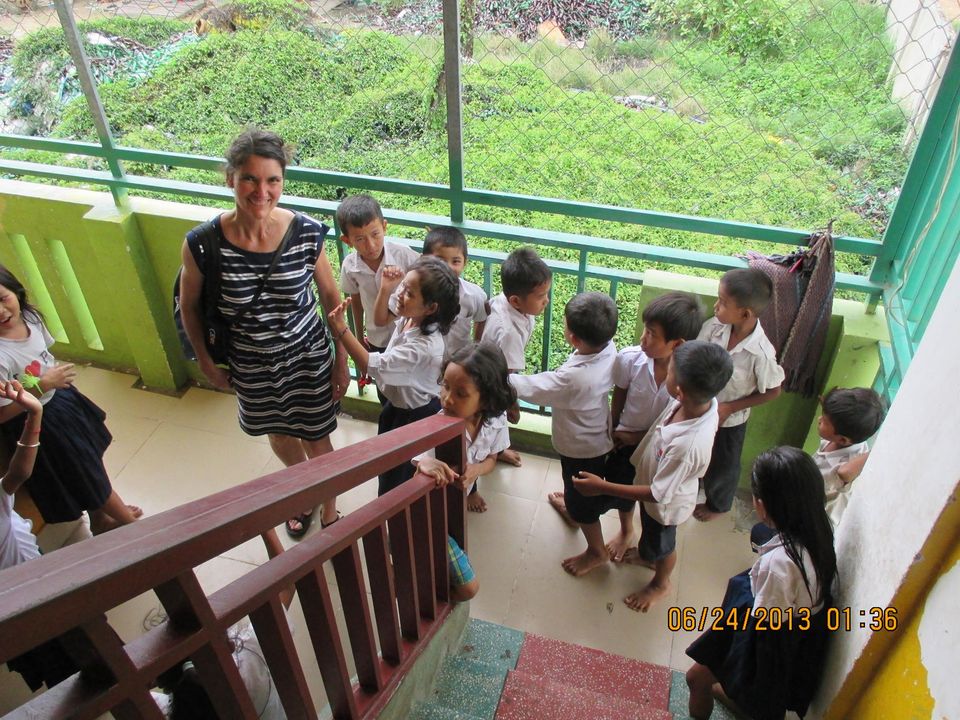
It was thrilling and also very moving. The school was alive with the energy and enthusiasm of the students, from the youngest to the eldest. It was sobering to know that none of these children would be getting an education if this school weren’t here, if Phymean hadn’t made the decision to quit her job, finance the project, build and furnish the school, hire teachers, do fundraising to keep it running and so on.
What do you hope readers take away after learning about Phymean and the PIO?
It’s hard to narrow this down, but…back in 2002, Phymean was sitting along the Mekong River on her lunch break from her government job. She knew many children in Phnom Penh were unhoused, some working on the dump site, others working the city streets, asking for money. Most weren’t going to school because they had to work so their families could eat.
On this day, she saw 10 hungry children rummaging in the garbage can for scraps. And Phymean didn’t look away or ignore the children. She didn’t get up and leave. On this day, she asked them, “Can I do anything to help you?”
The children answered: they told her they wanted to go to school. And then Phymean made another important decision: she decided to make it happen.
I hope this is something readers remember.
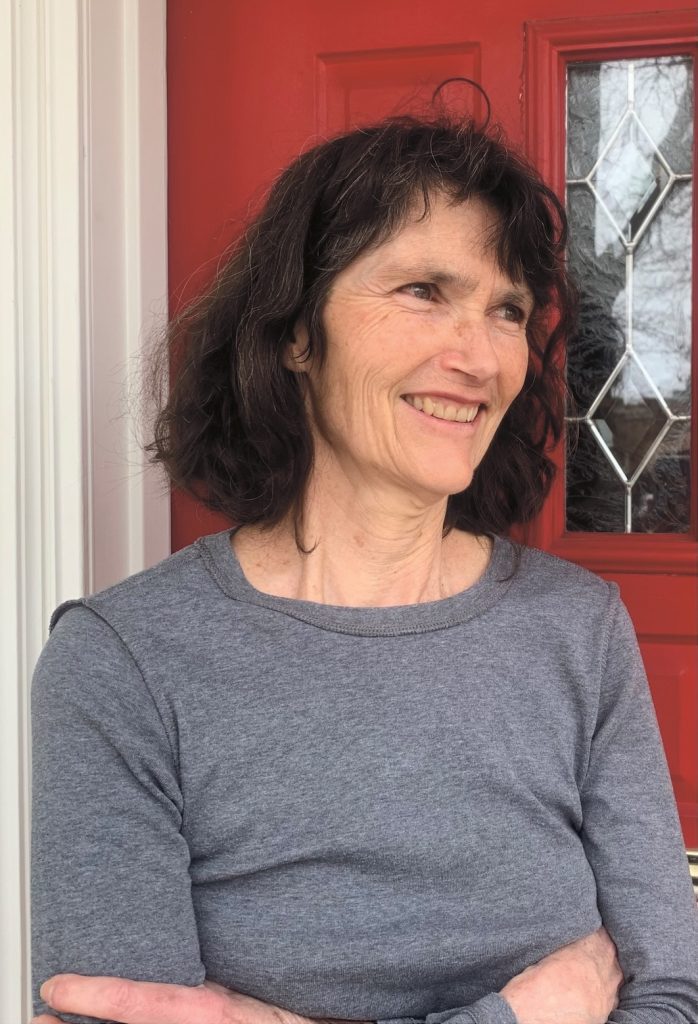
Susan Hughes is a freelance editor and the award-winning writer of over 30 books of fiction and nonfiction for kids and teens. Her books have received multiple nominations for the Forest of Reading awards, the TD Children’s Literature Awards, and the Norma Fleck Award for Canadian Children’s Non-Fiction. Susan loves reading, writing, running and hanging out with her kids, friends and family. She lives in Toronto.