
When it comes to dealing with environmental issues, young people are often the true ‘adults’ in the room.
—Mark Leiren-Young, author of One Ocean
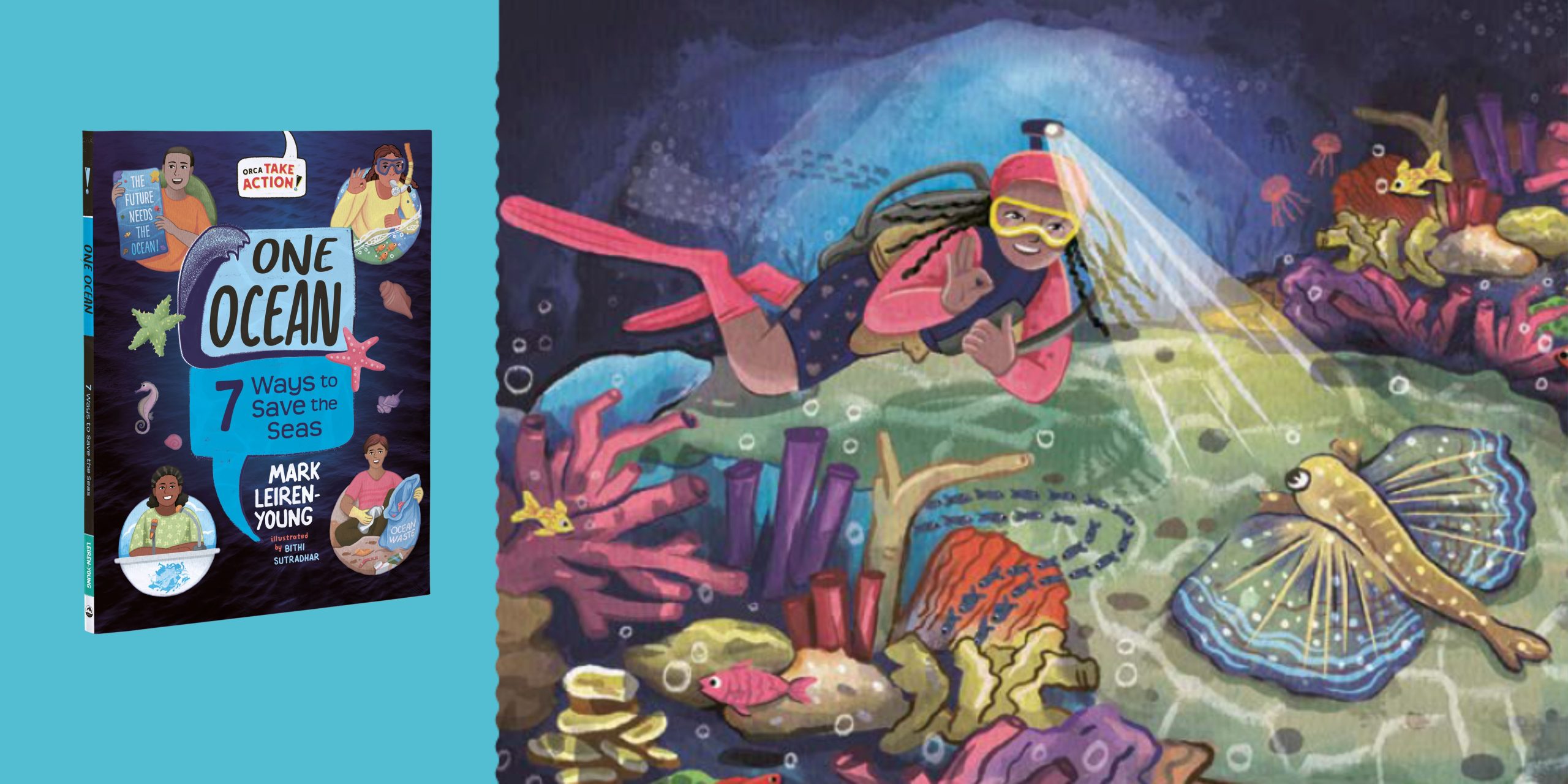
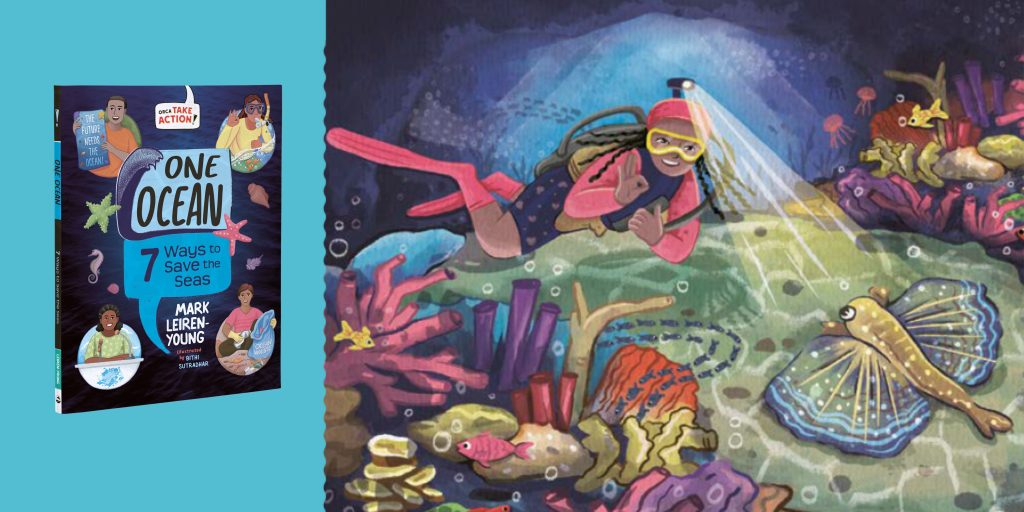
In One Ocean: 7 Ways to Save the Seas, young readers learn practical ways to help protect the ocean and the over 250,000 species who call it home. Author Mark Leiren-Young interviewed young ocean activists from around the world, including Rylee Grace, beach cleanup organizer, and Finlay Pringle, who campaigned against the dumping of raw sewage into the ocean near his home, among others.
How did you originally discover your passion for marine life and the environment?
I’ve always loved the water and felt most at home on islands. My earliest encounters with the animals I’ve written about for Orca were all at the Vancouver Aquarium, because that was the only place a city kid was likely to see an orca, an octopus and a shark.
I went from interested to obsessed when I learned the story of Moby Doll—the first orca ever displayed in captivity—and realized the impact this young whale had on the relationship between humans and whales. When I discovered that no one else was as passionate about sharing this story as I was, I knew I had to write about it. And that was when the orcas took over my life.
Why do you feel it’s important to refer to one ocean, instead of five distinct oceans?
The idea of pretending that the ocean isn’t interconnected seems to have less to do with the reality of the planet than making sure that the countries next to these bodies of water can claim some sort of ownership over them.
Animals who call the ocean home—like sperm whales—call the entire ocean home. Most humans forget that over 70 percent of the planet is covered with water and most of it is connected. I want everyone to think about that connection.
What was your favorite part about writing the book?
I wasn’t really sure how to write this book until I realized I could build each chapter around a different young eco-hero. So my favorite part was interviewing the young people who are the heart of the book—many of whom I talked to for Skaana, my podcast about the animals who call the ocean home.
But a close second was seeing Bithi Sutradhar’s illustrations bring all the people, animals and ideas to life. I’ve never worked on a true picture book before, and seeing the images come together was kind of awesome.
What would you say to a young activist who wants to help the ocean but doesn’t know where to start?
Start with what you’re passionate about or at least what you’re interested in knowing more about. Your passion and enthusiasm will be contagious.
Also, Hawaiian youth activist Rylee Brooke kind of rocked my world with her determination to get young people involved in politics early. It can happen. It should happen. It’s your planet and your future, and you’ve got a right to be heard. And when it comes to dealing with environmental issues, young people are often the true “adults” in the room.
You’ve written nonfiction books about orcas, sharks, octopuses and saving the ocean. What’s next?
Polar bears!!! And I just went to hang out with them in Churchill, Manitoba!
Not only are they a marine mammal—so they fit with the other ocean books I’ve written for Orca—but they are the icons of the climate crisis. So writing about polar bears also lets me write about the importance of keeping part of the planet cold.
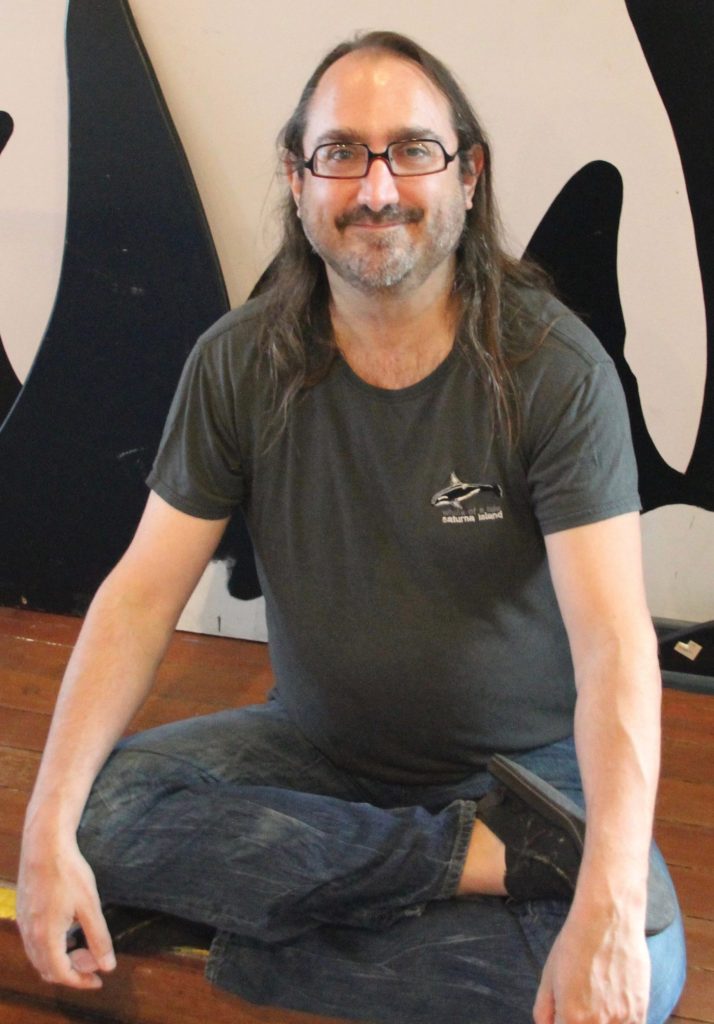
Mark Leiren-Young is a writer, documentary filmmaker, playwright, podcaster and orca activist. His book The Killer Whale Who Changed the World won a Science Writers and Communicators of Canada book award. He wrote, directed and produced the award-winning documentary The Hundred-Year-Old Whale, and his documentary about Moby Doll is being produced by Middle Child Films. Mark hosts Skaana, a podcast about orca and ocean stories, and is actively involved in the fight for the survival of the endangered southern residents. Mark has written for other young audiences for ABC, PBS, YTV, Treehouse and BBC Kids. His books for young readers include Big Whales, Small World, Orcas of the Salish Sea, Octopus Ocean and the City of Victoria Children’s Book Prize winner, Orcas Everywhere. He lives in Victoria, British Columbia. Author photo by Rayne Benu.