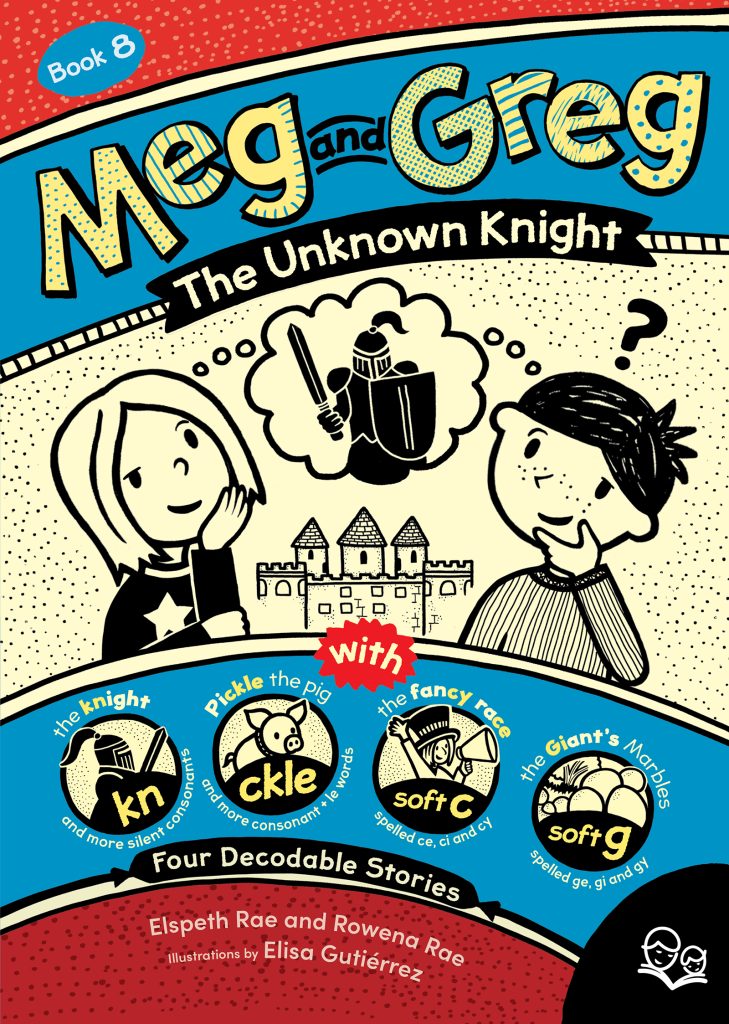
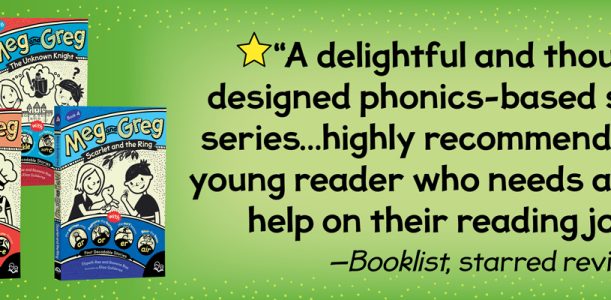

Sisters Elspeth Rae and Rowena Rae are the authors of the award-winning Meg and Greg decodable series for striving readers. The series is specially designed for shared reading and it helps children of all abilities overcome language-based learning difficulties and achieve reading success.
Read on to hear from the authors on one of the concepts addressed in book eight in the series: silent letters.
Do you ever play around with English spellings by pronouncing all the letters in a word, like Wed-nes-day for Wednesday, skiz-ers for scissors and iz-land for island?
Playing aside, the English language is teeming with words where some letters don’t get spoken aloud. These so-called silent letters are scattered throughout our language, but don’t be fooled: just because a letter isn’t pronounced doesn’t mean it’s idle! All letters have a purpose, even when they’re silent.
Most people think that spelling has one job—telling you how to pronounce a word. But spelling has another equally important job: it gives clues to a word’s meaning and relationships with other words. Many times silent letters appear because of a word’s history (the fancy word for this being “etymology”). They’re markers of where that word has come from and what it means.
Silent letters can be consonants or vowels. In this post, we’ll tell you about silent consonants, and another time we’ll write about silent vowels (which really means telling you about the silent letter e).
The secret lives of silent consonants
Silent consonants lurk in an impressive number of words. Unfortunately there aren’t any rules or generalizations for reading and spelling words with silent letters. But exploring a word’s history can help explain why a silent consonant appears in a word, and this can help with remembering how to pronounce and spell it. Here are some interesting things about silent consonants:
Some used to have a voice. This is true of many consonant clusters, such as gn (gnat), kn (knife), mb (lamb), mn (mnemonic), pb (raspberry), pn (pneumonia) and ps (psychic). Linguists suggest that one consonant sound got dropped over time because it was so hard to pronounce both of them. Over many generations the pronunciation might have changed, but the spelling hasn’t.
Some give clues to word origin. When scribes started writing down words, there were no standard spellings. The scribes simply wrote the sounds people said, so different accents resulted in multiple spellings for the same word. Linguists in the 1500s and 1600s reformed these unpredictable spellings (some incorrectly) by adding letters to link words with their Latin or Greek origin. At the time, educated people knew these languages. For example, the word meaning “something that is owed to somebody” is debt. In the past, debt has been spelled det, dett, dette or dyett. The Latin origin of the word is debitum, so linguists added the letter b to make the spelling we use today: debt.
Some show word relationships. Silent consonants can show links between words that share a root. For example, the word “sign” has a silent g, but we pronounce the hard /g/ sound in related words like signal and signature. The same happens with the word “two” and its relatives twin, twelve and twist.
Some come from other languages. English has borrowed many words from other languages. Italian contributed ghetto and spaghetti and Japanese gave us tsunami. From French we got champagne and rendezvous, and from Greek we have pneumonia and pterodactyl.
Some are just odd! The letters gh get a lot of ridicule for their many pronunciations. Think of ghost, rough, night and hiccough. Some have explanations: ghost had an h added to the existing g by William Caxton, the first English printer (though it’s not clear why he did this). Others stem from linguists trying to put letters to the various sounds made as we force air through different mouth shapes. Over time, some became the /f/ sound while others went silent. Hiccough seems to come from the original hiccup being associated with cough.
Some are protectors: This one isn’t a consonant; the vowel u appears in words like guess, guitar and guy as a silent letter. It protects the letter g from being pronounced with a /j/ sound dictated by the following vowel—an e, i or y—that often indicates a soft g.
Now you know that English spelling is about so much more than how a word sounds. It’s as much about a word’s history, meaning and relationships with other words. So next time you come across a word with a silent consonant, take a closer look and ask what secret life that letter has. Is it giving you a clue to the word’s history? Its meaning? Its relationship to other words? See if you can put that word into one (or more!) of the categories we’ve given above.

Elspeth and Rowena are the authors of the Meg and Greg series of decodable books for new readers. Each book introduces a new spelling concept for children to practice. Book 8 in the series, Meg and Greg: The Unknown Knight, introduces words with silent consonants (as well as consonant + le words, soft c and soft g words). It is available for preorder and will be released in September 2026. For a full list of all the Meg and Greg books and the topics covered in them, visit megandgregbooks.com.